
Surreal Artists In A Strange World
Surrealism stands out as one of my favorite art movements, yet it’s often dominated in public consciousness by male artists like René Magritte and Salvador Dalí. This post aims to spotlight the remarkable works of prominent women artists within the Surrealist movement. While this overview is brief and by no means exhaustive, it serves as an introduction to these influential figures.
Emerging from the Dadaist movement, Surrealism sought to explore the unconscious mind, dreams, and the illogical. While many associate Surrealist art with its seemingly nonsensical imagery, there’s often profound meaning and symbolism embedded within. Much like the way we interpret dreams, these ‘dreamscapes’ hold significant meaning, even if they appear disjointed at first glance.
An intriguing technique that influenced both Dadaists and Surrealists is Automatism—creating art without conscious thought. Often Surrealists artists allowed their unconscious mind to take over the creative process.
From a herstorical perspective, this ‘automatism’ provided a platform for women artists to express deeply personal and progressive feelings and beliefs on gender identity. While their male counterparts often dismissed such views, the unique and sometimes ‘strange’ nature of Surrealist art made it challenging for audiences to overlook the profound emotions and issues these artists addressed.
Much of their works leave us to wonder; what does it really mean to be a woman?
Claude Cahun (Lucy Schwob)
Nantes, France 1894- Jersey 1954
“Under this mask, another mask. I will never finish lifting up all these faces.”
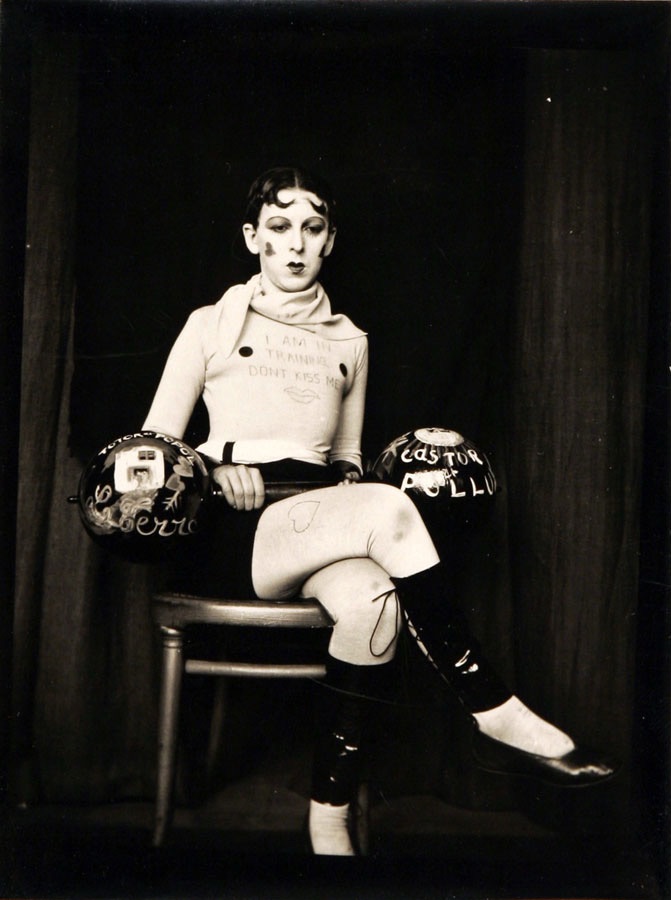
Claude Cahun was a prominent French artist during the Surrealist movement. Focused on disrupting gender norms and societal belief on gender and sexuality they were far, far ahead of their time. When they were alive Cahun was called by she/her but with our more enlightened views on gender, historians today often use they/them pronouns to refer to Cahun as she was very much fluid in her approach to her own gender. In fact they stated themselves “Neuter is the only gender that always suits me”. Much of their work is self made and they are well know for their striking self portraits; but much of their work was made in collaboration with their lifelong partner and step-sister, Marcel Moore (aka Suzanne Malherbe).
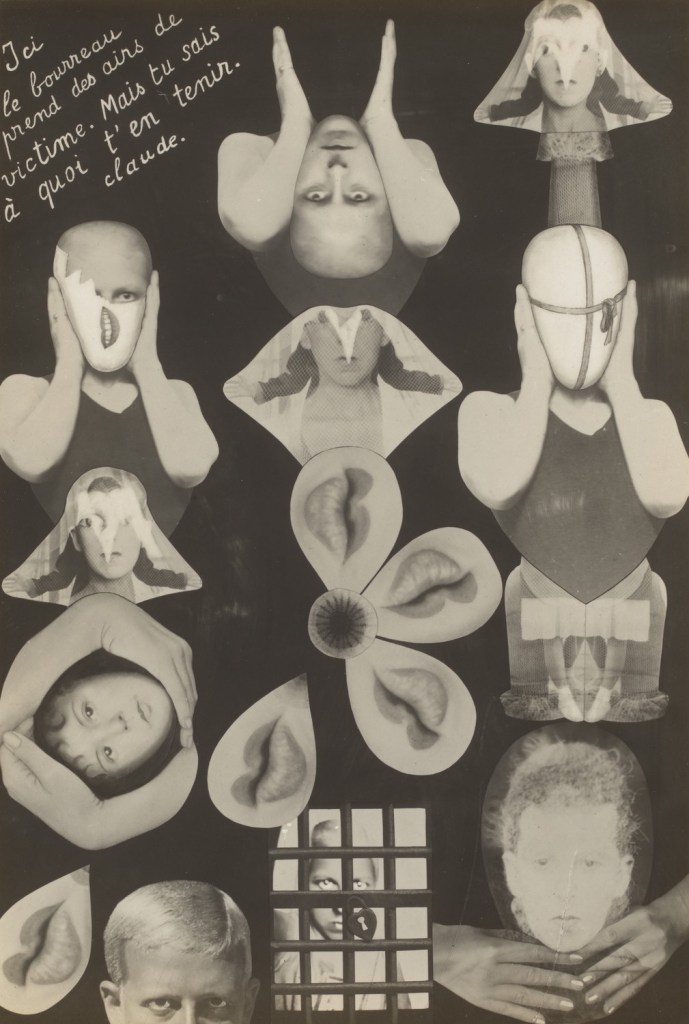
Claude.”
Amy Nimr
1898 Cairo, Egypt – 1974 Paris, France
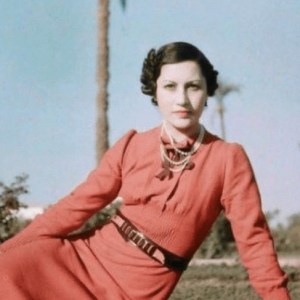
Amy Nimr was an Egyptian born painter whose education in England and Paris led her to be a key figure in spreading Surrealism to Egypt. A prominent societal figure Nimr had many connections both artistic and political throughout her career. Surprisingly, for how influential she was for Egypt’s art movements I couldn’t find a single quote from her on the web. In fact through most my research it seems her story is quite buried. Later in her life she lost her son to a land mine accident in 1943 which set off some of her darkest paintings of her career. You may notice that her style of painting is much different from what we usually see in surrealist art- that’s why I enjoy including it here. While holding a more impressionistic painting style, her surrealist works still have the key elements of the movement- dreamlike, disturbing, and strange.
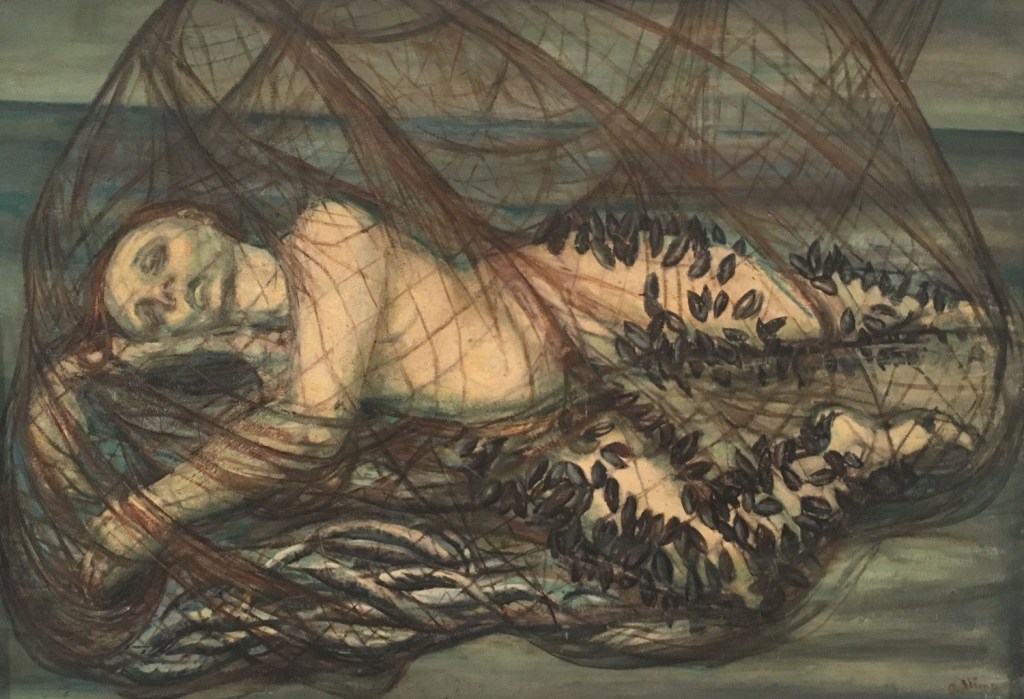
Amy Nimr, Sans titre (Jeune fille et le filet), ca. 1928, 100 x 140 cm, Private collection

Remedios Varo
Anglés, Spain 1908 – Mexico City, Mexico 1963
“The dream world and the real world are the same.”

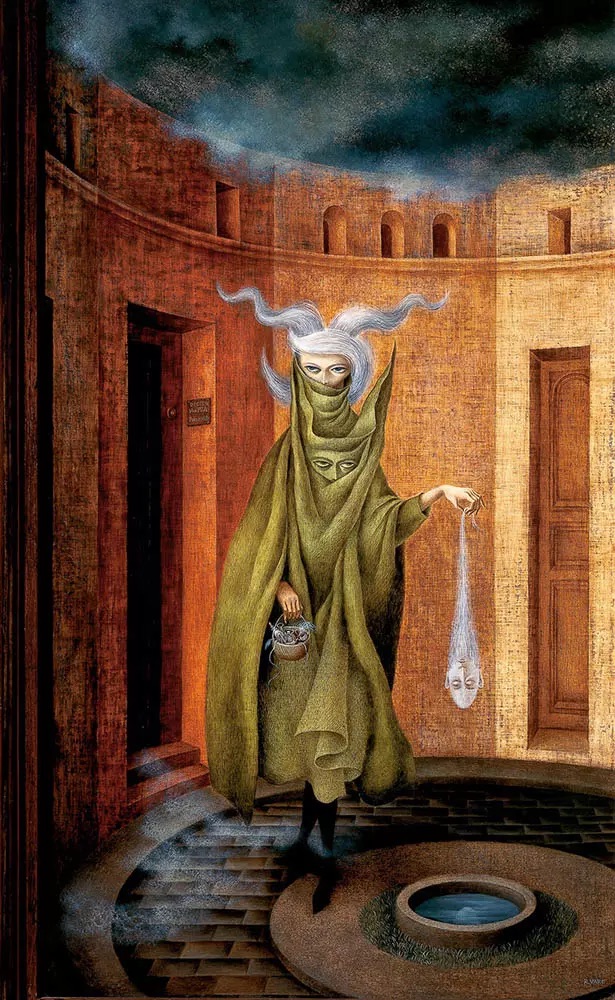
Remidios Varo is one of my ultimate favorite surrealist artists. Varo was a prolific Spanish born painter who combined the alchemical, mystical, and philosophic into mind bending dreamscapes. She studied art and painting in Spain and France before emigrating to Mexico to flee Fascism in 1941. By the time of her death in 1963 she had completed over 500 works. Definitely a girl’s girl, her work often portrays a protagonist female character confronting the metaphysical world or fantastic occurrences. Symbol rich and iconographically heavy her dreamscapes are feasts for the female gaze.
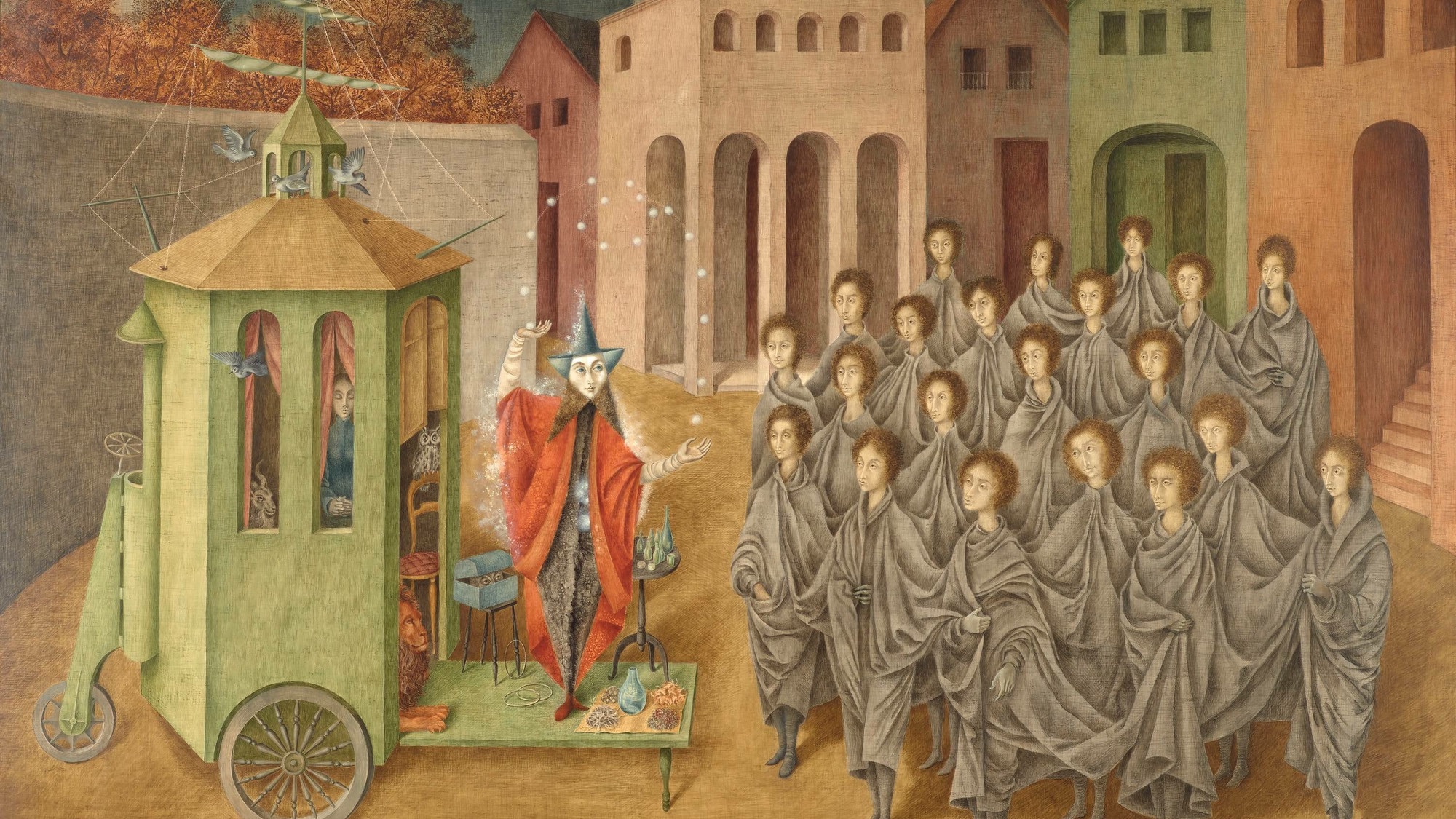
© 2025 Remedios Varo, Artists Rights
Society (ARS), New York / VEGAP, Madrid.
Méret Oppenheim
Berlin, Germany 1913 – Basel, Switzerland 1985
“If you speak a new language of your own, that others have yet to learn, you may have to wait a very long time for a positive echo.”
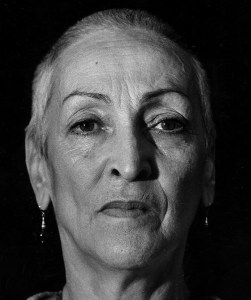
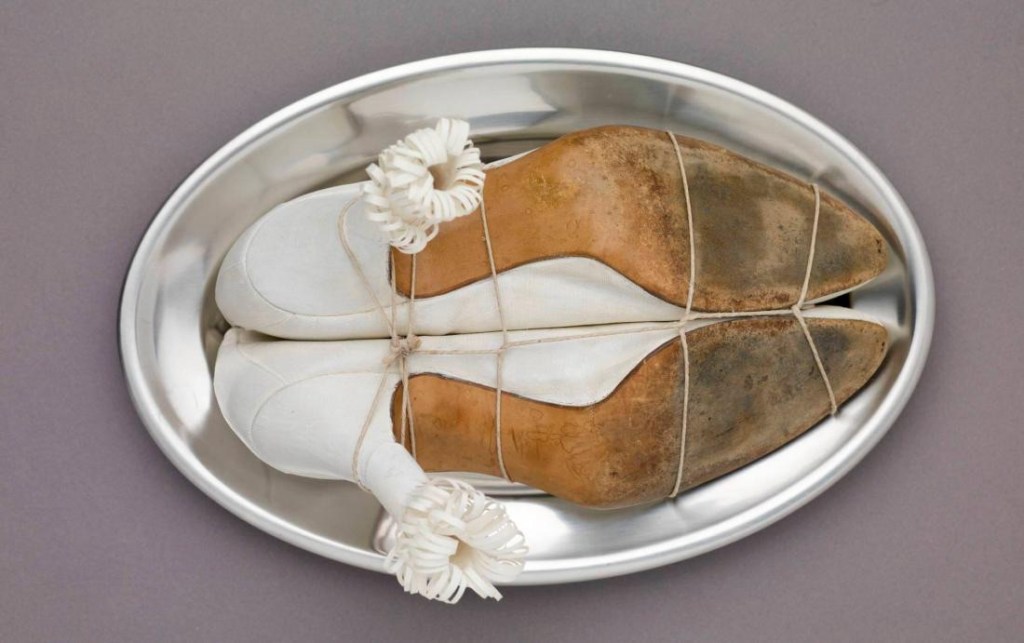
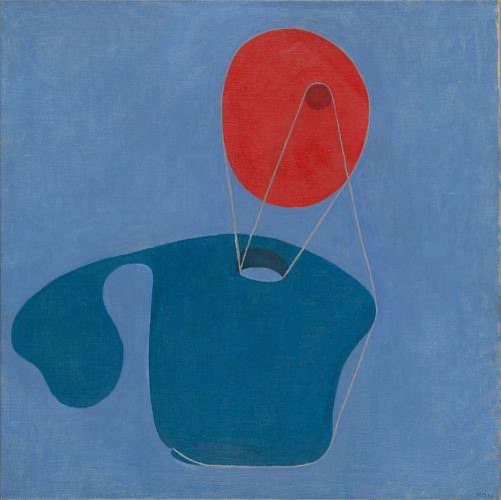
I’ll bet most people have come across a photo of Méret Oppenheim’s Object (1936) at least once in their lives. In fact this one piece, created when she was only 23 years old would often come to overshadow her following work. While living in Paris she was able to connect with the French surrealists of the time and quickly became a key figure of the movement. The aforementioned piece Object (1936) showed in the first ever Surrealist exhibition at the Museum of Modern Art and then became the MoMA’s first ever acquisition of art made by a woman artist. After her whiplash success she struggled to find meaning in her later works, feeling unable to surpass the pressure the success of Object (1936) had placed on her. For nearly twenty years she suffered deep depression and artistic crisis. After surviving this long lasting trial she went back to creating; going on to create jewelry, sculpture, and performance art. So, while most of art history has regaled her as a ‘one hit wonder’ tagging along on the backs of male surrealist artists I believe it’s safe to say she was an amazing artist in her own right.
© 2025 Artists Rights Society (ARS),
New York / Pro Litteris, Zurich.
Gertrude Abercrombie
Austin, Texas 1909 – Chicago. Illinois 1977
“The whole world is a mystery.”

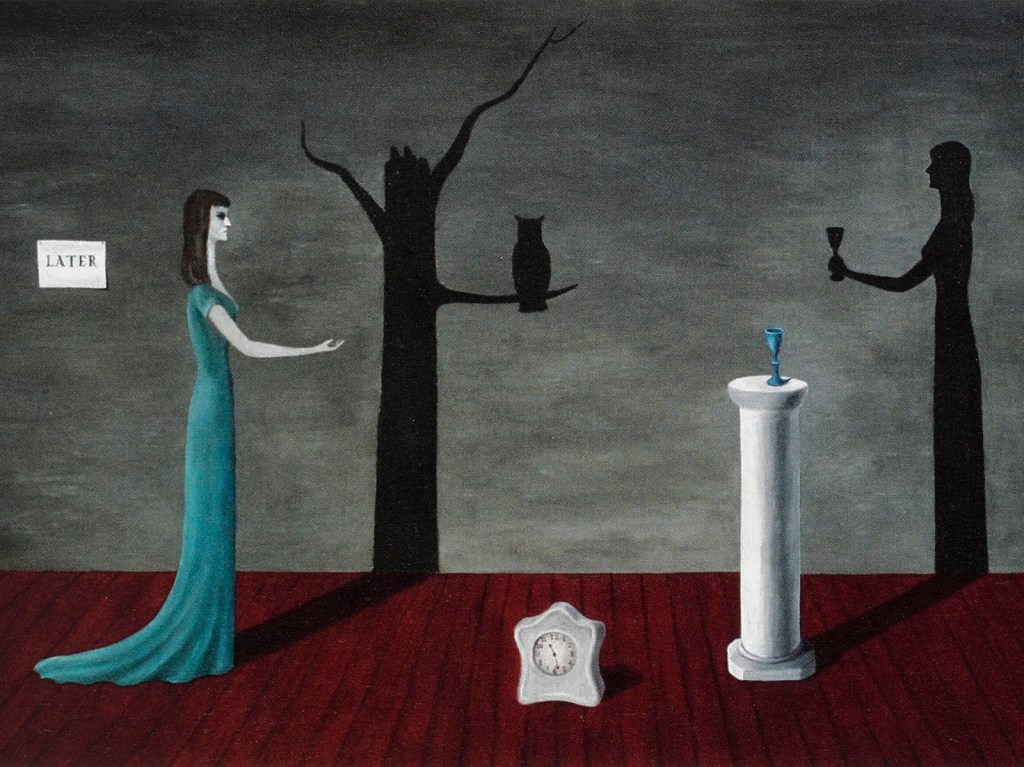
Seldom heard of, Gertrude Abercrombie was an essential figure in the American Surrealist movement. Dubbed the ‘Queen of bohemian artists’ she was a party girl and a patron of jazz, often throwing wonderful jazz parties for her friends and fellow artists. Born to two opera singers, her artistic qualities were fostered from a young age and she grew into a prominent artist. Capturing whimsy and mystery with her dreamscapes and self portraits with masterful skill earned her a spot with the Surrealist movement.

Dorothea Tanning
Galesburg, Illinois 1910 – Manhattan, New York 2012
“Am I a surrealist? Am I a sophist, a Buddhist, a Zoroastrian? Am I an extremist, an alchemist, a contortionist, a mythologist, a fantasist, a humorist? Must we artists bow our heads and accept a label, without which we do not exist? The underlying ideas of surrealism are still very much with me. They are in the backs of a lot of other minds too, even in those so young as to have known only the records, the hearsay, the debris. But I have no label except artist.”
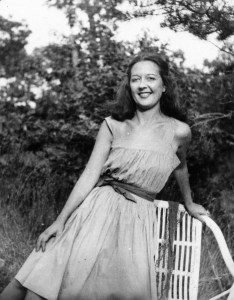
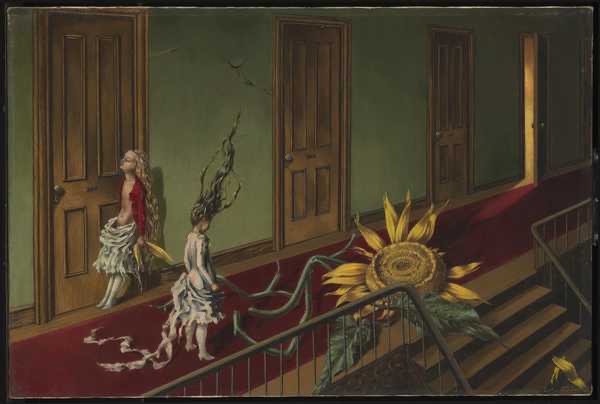
Dorothea was no doubt a champion of the Surrealist movement with a seventy year long Art career. She lived to be 102, and in her long life created many splendid and mysterious paintings and sculptures. An art school drop-out, Tanning rebelled against a traditional art education, craving freedom to express her own creativity. She was no stranger to rebelliousness; raised in a conservative home in Illinois she was raised to be a mother, and a wife. She had other ideas for her life, though. While she did become a wife, though never a mother, she never made it central to who she was. She was an artist first, not a woman artist, just an artist. In her own words, “women artists. There is no such thing – or person. It’s just as much a contradiction in terms as ‘man artist’ or ‘elephant artist’”.
Do you have a favorite surrealist artist? Let me know in the comments below 👇!
Thank you for reading ❤️
 Art Herstory Modern Soul
Leave a comment