
– Entartete Kunst –
Art Deemed Degenerate and Three Artists Who Suffered During WW II
Today, May 8th, is a public holiday here in Berlin. It’s a day recognized every year but this year was made a holiday because it has been 80 years since the Nazis were defeated and Germany liberated from their control. It’s remarkable to think that less than a century has passed since the end of World War II. I thought today would be a special day to recognize some of the artists who were persecuted or suffered under Nazi rule and whose art was shown in the Entartete Kunst, the Degenerate Art Exhibit, in 1937. Through the violence done to their works we also feel the violence done onto these artists.
These three stories are tragic, but it’s important that their names not be lost as the last survivors of the war fade away. We can honor their art and hear their stories so that their precious memory may live on in our collective mind.
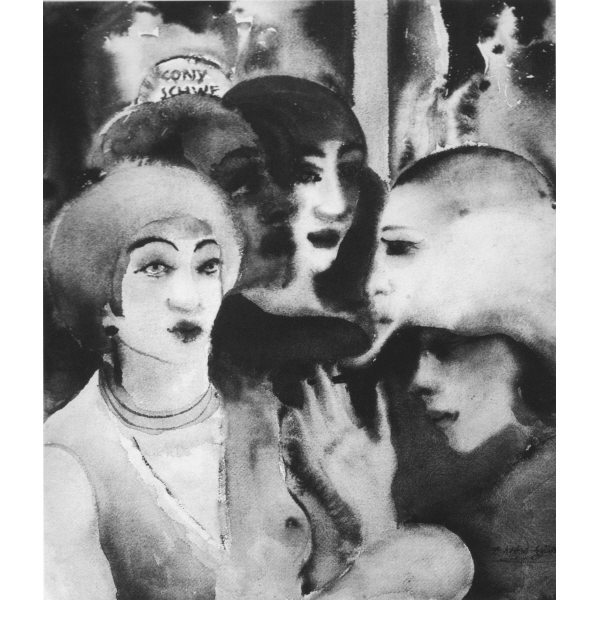
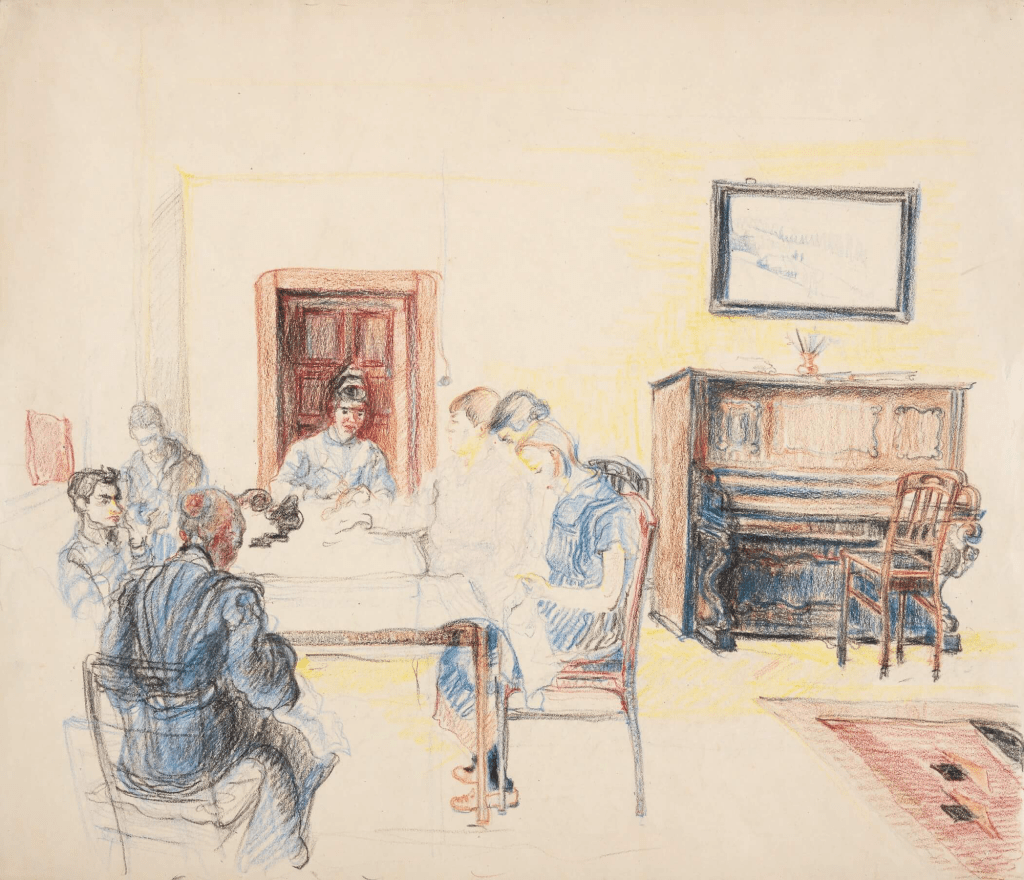
Elfriede Lohse-Wächtler (1899 – 1940)
Elfriede’ a story is tragic but out of tragedy she never stopped creating art. Struggling with mental health and lifelong poverty she was in and out of psychiatric wards through her life. While admitted she would paint her experience inside the hospitals, giving viewers and inside look into her life there in the artistic style of “New Objectivity”. Art critics praised her work, and in 1929, she successfully exhibited in both group and solo shows.. In 1932 she was admitted to the Dresden City Hospital and then transferred to the Arnsdorf State Institution. It was there that doctors diagnosed her with schizophrenia. She found ways to cope with her suffering through art, chronicling life at Arnsdorf through numerous drawings and paintings. On July 14th, 1933 the ‘Law for the Prevention of Hereditarily Diseased Offspring’ was passed by the Nazi government mandating the forced sterilization of individuals with physical and mental disabilities. In 1935 Elfriede was subjected to this forced procedure. After this violation, she no longer created art, she was never able to recover from her deep depression and trauma. Ultimately, she fell victim to ‘Action T4’, the centralized murder program run throughout Nazi Germany. By the Summer of 1940 Arnsdorf had become an intermediary for the Pirna-Sonnenstein extermination center. On July 31, 1940 Elfriede became one of the 53 women on the fourth transport from Arnsdorf to Pirna. She was murdered in the gas chambers the same day.
It isn’t possible to imagine the life this woman lived but until she couldn’t stand it anymore she created art. She left behind a gift to the world, allowing us to know her still. Nine of her works were shown in the Entartete Kunst. 400 of her works survive today. We only know what one of the nine works exhibited looked like as all but one of the nine were destroyed.
Anita Rée (1885 – 1933)
Anita Rée was born into an upper class family in Hamburg. Half Jewish, half Venezuelan, her family found it important she receive an artistic education. She was a confirmed Protestant and was even commissioned to paint a mural for the church of St. Ansgar in Langenhorn. Her work was exhibited in Hamburg, Paris, Italy, Scandinavia, and England. She was also a co-founder of the Hamburg Artists’ Association. Known for her stunning portraits and self-portraits, she captured the eyes of Hamburg’s elite, impressing people with the depth of emotion imbued in her paintings. However, with the rise of the Nazi party her a Jewish heritage would lead to her persecution. With the increase of anti-Semitic propaganda Anita lost all art commissions and was removed from the Hamburg Artists’ Association being labeled a ‘non-artistic member’ and her art ‘degenerate’. Her mural for St. Ansgar was never displayed; the Nazis argued that a Jew could not create Christian art that resonated. The five panel work was given to the Nikolaikirche at Hopfenmarkt and burned in a fire in 1943. In the Degenerate Art exhibit four of her works were shown but all were lost and we don’t know what they looked like.
In 1932, fearful and cast out, she fled to the island of Sylt. Here is what she said in her farewell letter to her sister,
“I can no longer find my way in such a world and have no other desire than to leave it, to which I no longer belong. What sense does it make—without family, without the art I once loved, and without any people—to continue to vegetate alone in such an indescribable, maddening world…?”
In 1933 she committed suicide.
After her death the Nazis came for her art that was still in the Hamburg Kunsthalle. The museum’s caretaker, Wilhelm Werner had gotten there first and secretly removed the paintings and hid them in his apartment. In 1945 when the war had ended he quietly put them back on display and they were saved from the ravages of WWII. From what I can gather, over 70 works survived WWII.
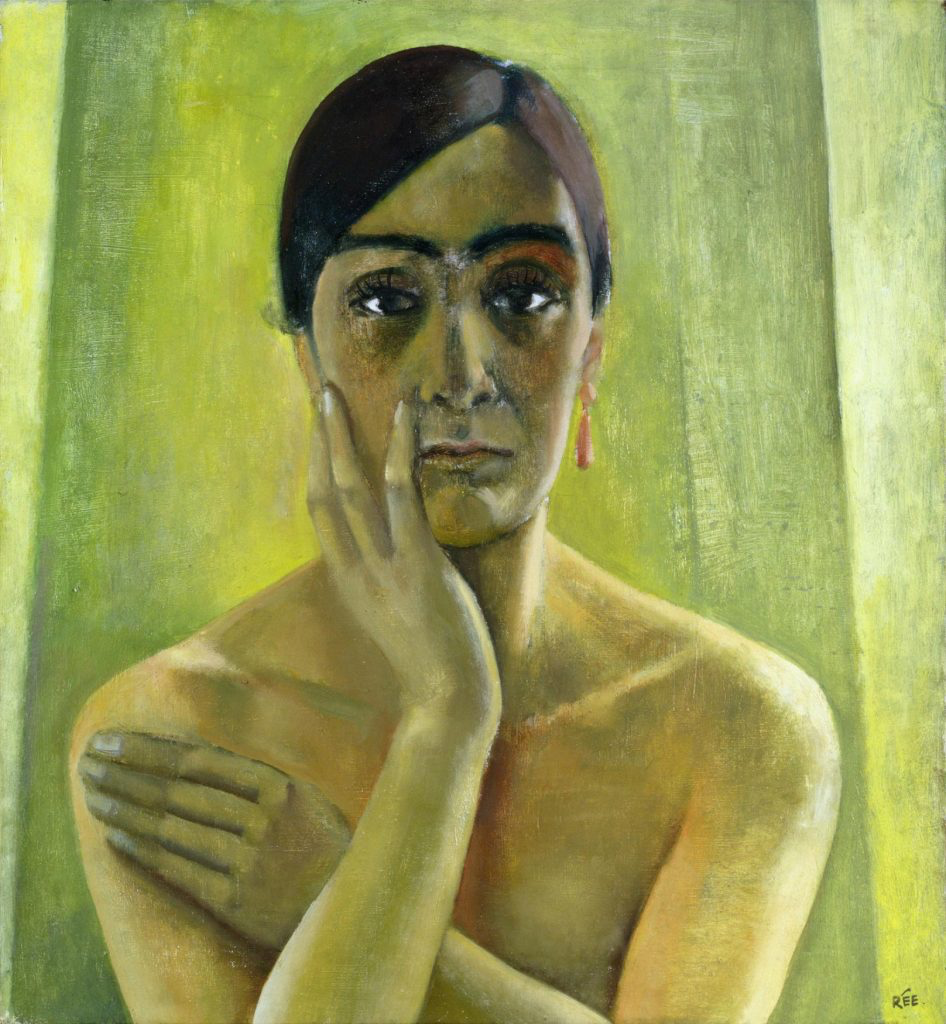
© Hamburger Kunsthalle.
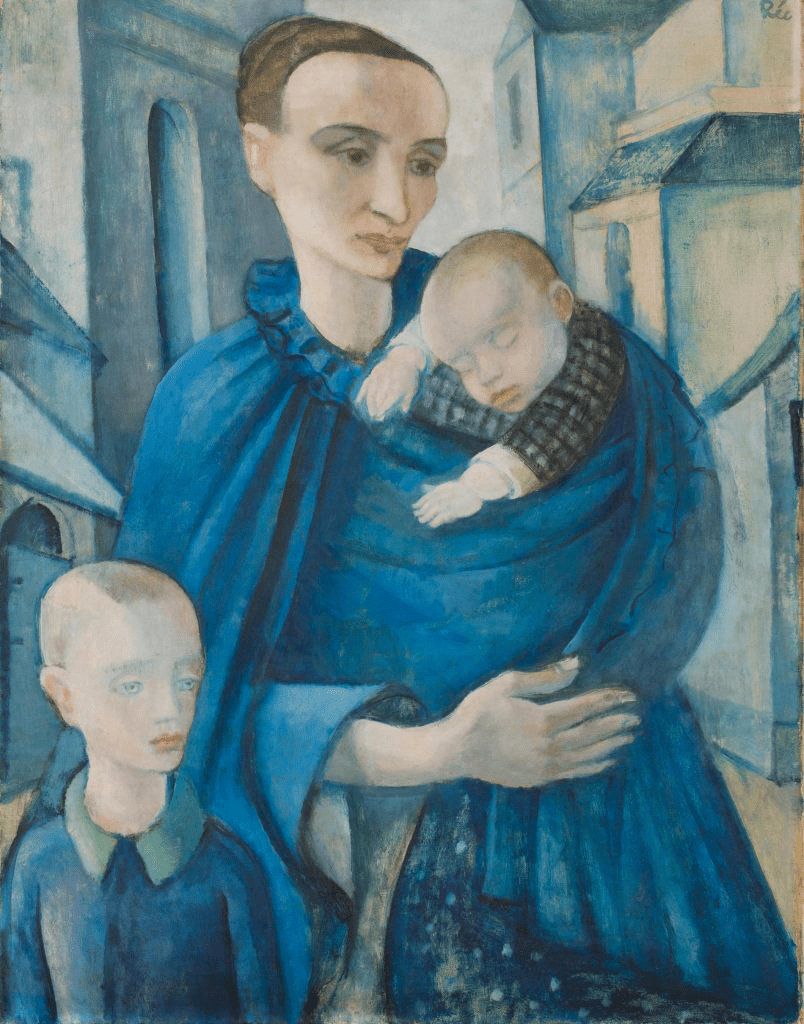
Copyright Hamburger Kunsthalle
Friedl Dicker-Brandeis (1898 – 1944)
Friedl was a natural born teacher. Gifted in the arts, while at school at the Weimar Bauhaus the director said of her “ multifaceted nature of her gifts and her unbelievable energy…already in her first year she began to teach the beginners”. In 1923 she and Franz Singer established Workshops of Fine Art in Berlin. Here they created book covers, textiles, children toys and stage designs for theaters. In 1925 she moved back to Vienna, her home city, and continued working in the crafts. In 1926 she opened the Atelier Singer-Dicker and here she and Franz Singer created furniture and interior design products- many of which won awards. Her career in teaching officially began in 1931 when Vienna invited her to hold an art workshop for kindergarten teachers. In 1934 she moved to Prague after being arrested in Vienna for Communist activities. In 1934 Prague was a Nazi stronghold and this decision would change the course of her life.
In 1942 she received a deportation order and on December 17, 1942 she and her husband were sent to Terezin, a Nazi sanctioned Jewish ghetto. In her time in the ghetto she taught art to hundreds of children. She also created costumes for at least two performances put on by the children in the ghetto. She also hosted a secret art exhibit for her students’ work in her basement. She did everything she could to bring joy to these children’s lives through a dark and chaotic time. Despite the fear she must have felt, she made sure she always had warm and strong energy for her students. During her time teaching she began to formulate theories on child psychology as it relates to art and what would be, today, art therapy. Here is what she said about the necessity of allowing children creative freedom:
“Why do adults want to make children be like themselves as quickly as possible?… Childhood is not a preliminary, immature stage on the way to adulthood. By prescribing the path to children, we are leading them away from their own creative abilities and we lead ourselves away from understanding the nature of these abilities.”
One of her students who survived the Holocaust said about her “Friedl’s teaching, the times spent drawing with her, are among the fondest memories of my life. Terezin made it more poignant but it would have been the same anywhere in the world… Friedl was the only one who taught without ever asking for anything in return. She just gave of herself.”
On October 6, 1944 on transport EO-167 she and some of her young students were relocated to Auschwitz and murdered by gassing. After her death over five thousand drawings made during her classes were found and they are now housed in the Jewish Museum in Prague.
The 130 works she created when transportation to the death camps was put on hold are now housed in the Simon Wiesenthal Center in Los Angeles, California and were not discovered until the 1980’s.
Her art was not apart of the Degenerate Art Exhibit and that is probably why much of it was never seized. In her time she wasn’t well known enough to have attracted the Nazi’s attention for her art but today we have the chance to view her beautiful work because of this fact.
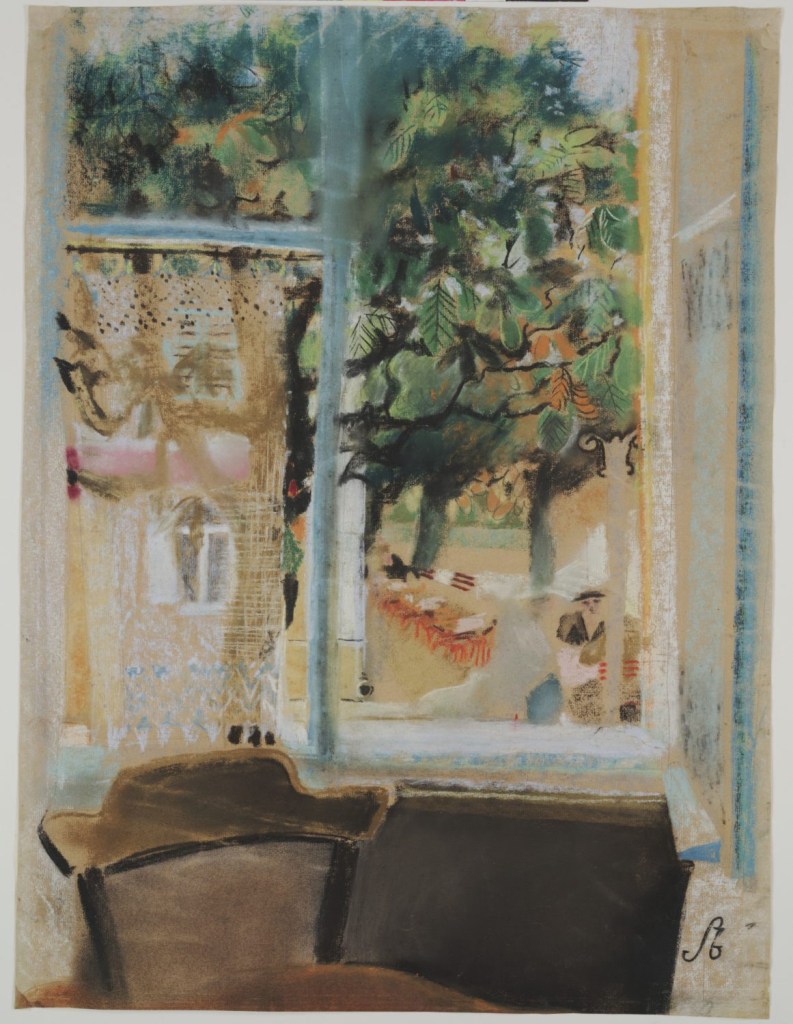
Freidl Dicker-Brandeis, View from the window in Františkovy Lázně, 1936. Copyright Jewish Museum, Prague.
 Art Herstory Modern Soul
Leave a comment