
“I’ve never bothered painting the ugly things in life. People struggling, having difficulty. You meet that when you go out, and then you have to come back and see the same thing hanging on the wall. No. I wanted something beautiful that you could sit down and look at. And then, the paintings change you.” –– Alma W. Thomas
Until you find yourself at the end of your story, it is never too late to…
I’ll leave the rest of that sentence unfinished. Whatever you feel you’re too late for is known only to you. For Alma Woodsey Thomas, it was never too late for her career to take off. Her work didn’t make its debut until her first solo show in 1966 – she was 75 years old. For most of her life, being a professional artist wasn’t her main focus. In fact, she had a highly successful 35-year teaching career at Shaw Junior High School in Washington, D.C. All the while, she never stopped creating. Now, her name lives on among the greats—because she refused to believe it was ever too late.
Alma was born in Columbus, Georgia, but her family relocated to Washington, D.C. seeking safety from the racial violence that was terrorizing the American South. In 1907 when the family moved to D.C., it was still a segregated city but perhaps the Thomases felt there were more opportunities for them there than in many other American cities.
Alma attended Howard University and became the first person to graduate with a fine arts degree in 1924. In 1934, she earned a master’s degree in arts education from Columbia University and continued her studies at American University during the 1950’s. She quickly became a key figure in the Washington art scene, joining the Little Paris Group — a Black artists’ collective.
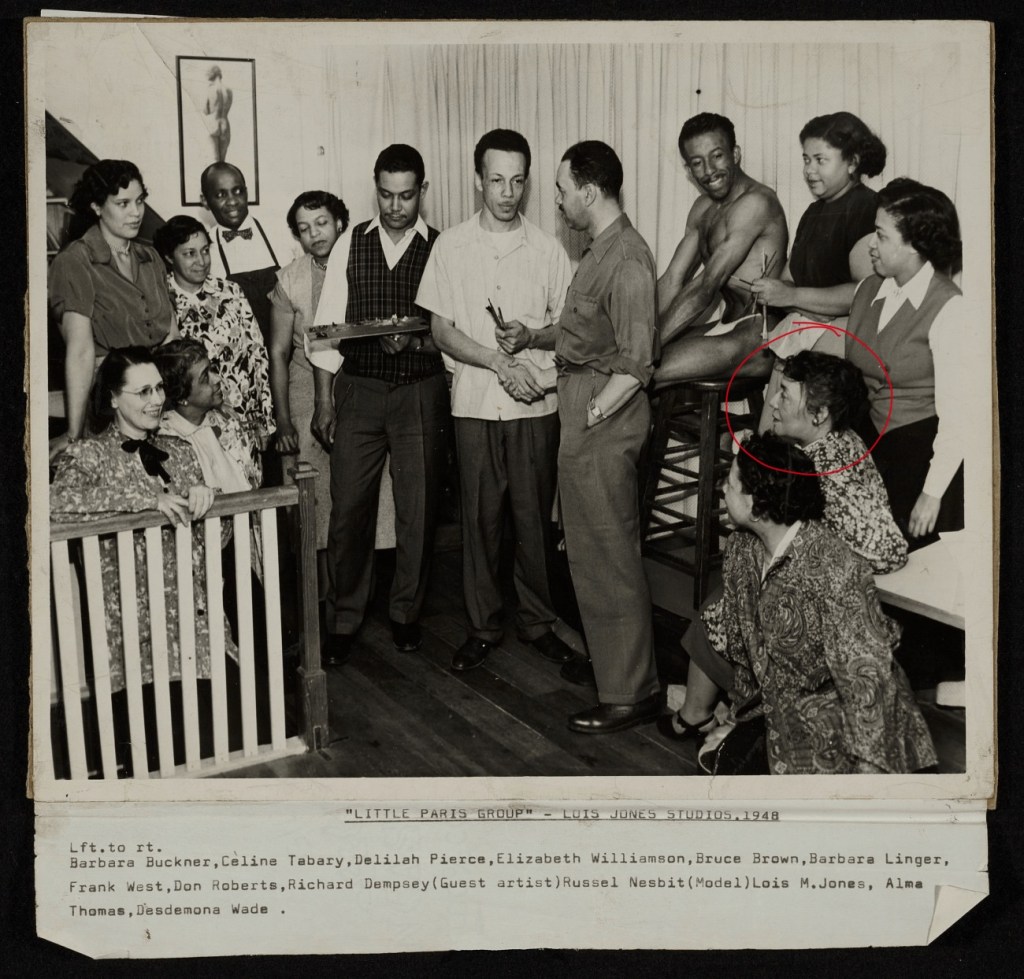
Little Paris Group in Lois Jones’ studio, 1948. Alma Thomas papers, circa 1894-2001. Archives of American Art, Smithsonian Institution.
Alma was a regular artist in the Barnett Aden Gallery, which opened in 1934. The gallery was one of the earliest —if not the first—Black-owned galleries in the United States. Interestingly, the founder of the Barnett Aden Gallery was James V. Herring, who had previously created the Department of Art at Howard University. He went on to become Alma’s professor when she studied there, supporting her in becoming the department’s first graduate! Things came full circle when she became one of the artists regularly shown in his small private gallery. Cool right?
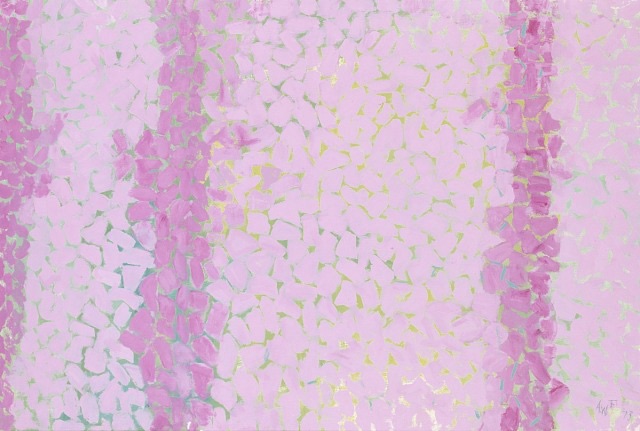
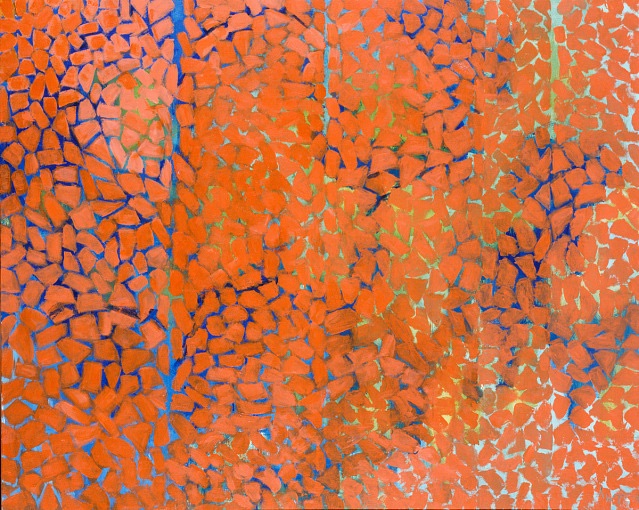
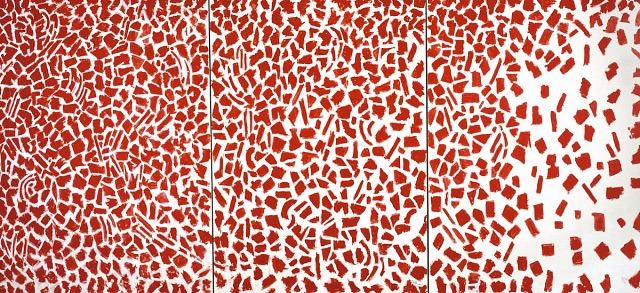
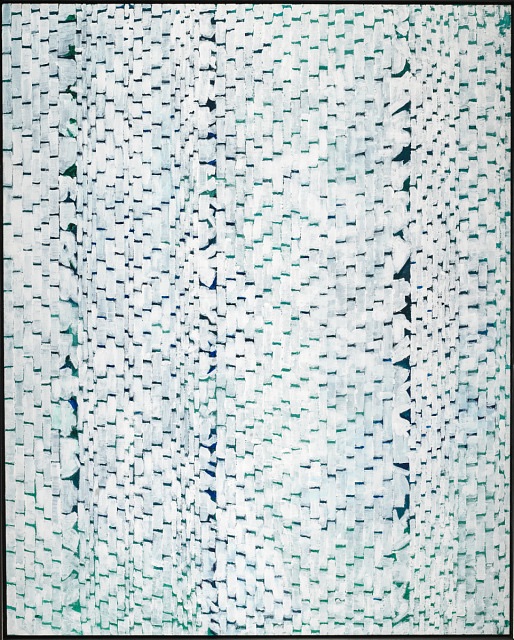
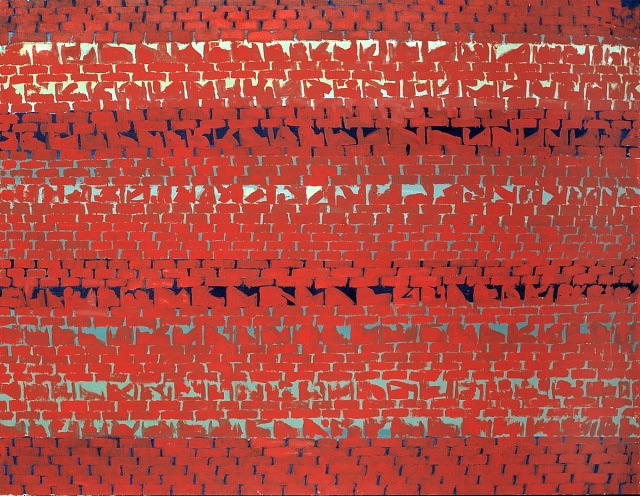
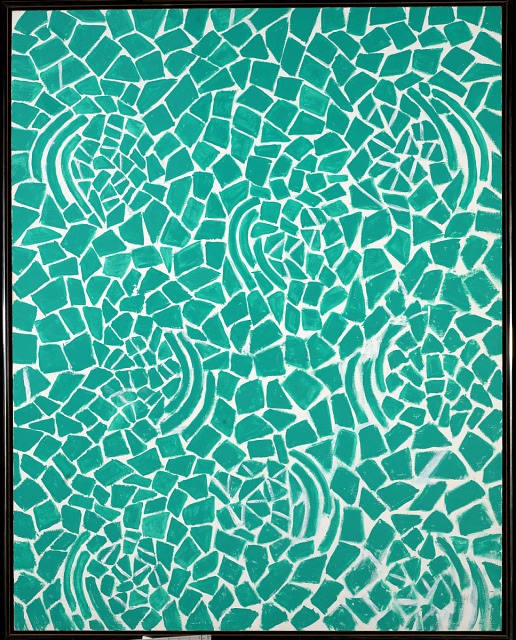
Alma was a talented representational artist but developed her signature abstract style after her retirement from teaching. Today, her work is recognized for its beautiful dabs of color on abstract backgrounds, often arranged in concentric patterns.
“Do you see that painting? Look at it move. That’s energy and I’m the one who put it there. . . . I transform energy with these old limbs of mine.”
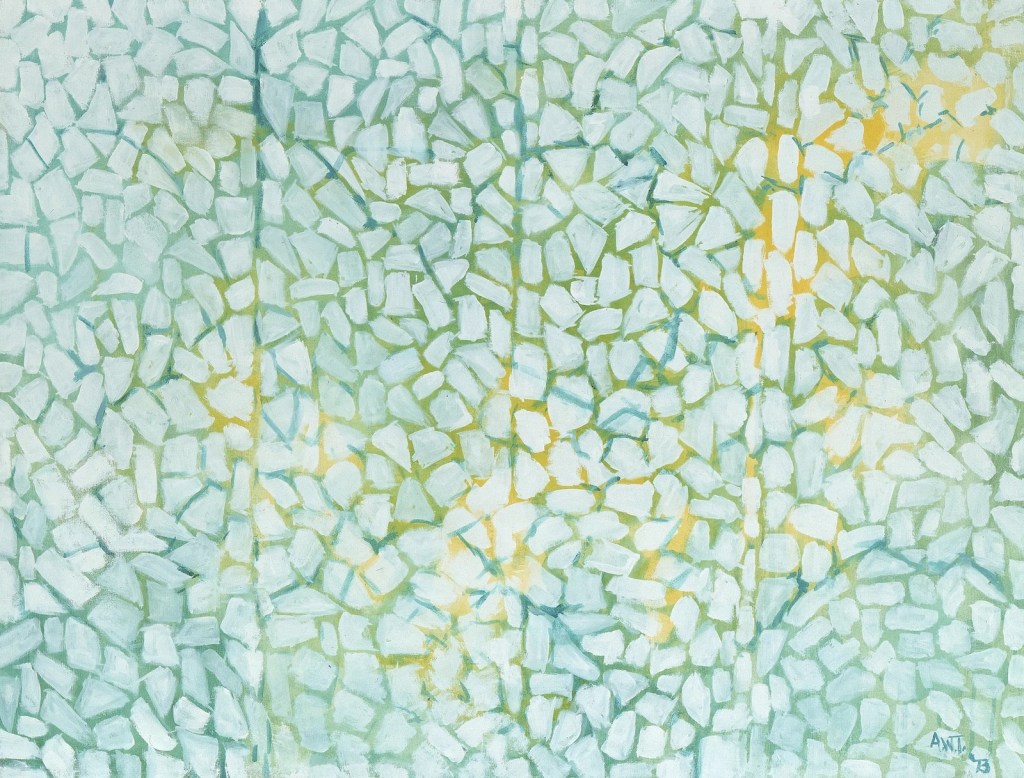
Like many artists, Alma drew inspiration from the world around her, as she saw it—such as the nature surrounding her town (Aquatic Gardens, 1973, SAAM) and the beginnings of space travel (Snoopy—Early Sun Display on Earth, 1970, SAAM). However, regarding the critical Civil Rights Movement occurring around her at the time, she chose to focus her art not on political messages but on bringing people together through a shared experience of beauty,
“Through color, I have sought to concentrate on beauty and happiness, rather than on man’s inhumanity to man”

“[I visit gardens] not to paint but to get impressions. A friend of mine goes. . . and gets every leaf. I said I’d go crazy doing that. I told him, ‘Just go and look. It settles you, and then you don’t need to look at it anymore.’”
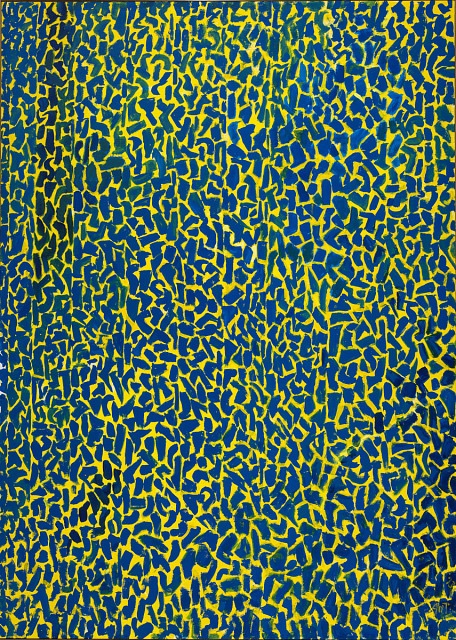
In 1972, Alma became the first woman to ever have a solo show at the Whitney Museum of American Art. By 1972, the Whitney had been open for 40 years and no women had never had a solo show. Incredible isn’t it? Alma paved the way for all women—not just some, as white women have tended to do both intentionally and unintentionally throughout history— with her beautiful, colorful works of art.
“When I was a little girl in Columbus, there were things we could do and things we couldn’t. One of the things we couldn’t do was go into museums, let alone think of hanging our pictures there. My, times have changed. Just look at me now.”
Usually, at this point in an artist’s story, I’d start interpreting their work with you—but I think with Alma’s art we should appreciate it as it simply exists. I feel she would have wanted us to simply look at the beauty of her work. The beauty of the world is wondrous and doesn’t always need to be dissected. We should simply look, feel, and be at peace.
Thank you for reading 🩷 and supporting my blog. If you liked what you read be sure to subscribe and comment your thoughts below! 🎨
In The News
The street where Alma Thomas lived for 70 years is renamed in her honor – read about it here!
MLA Bibliography
- “Alma Woodsey Thomas.” National Museum of Women in the Arts, 2023, https://nmwa.org/art/artists/alma-woodsey-thomas/.
- “Alma Thomas.” Smithsonian American Art Museum, https://americanart.si.edu/artist/alma-thomas-4778.
- “Little Paris Group: Lois Jones Studio.” Archives of American Art, https://www.aaa.si.edu/collections/items/detail/little-paris-group-lois-jones-studio-7393.
- “Finding Aid: NMAAHC-A2014_63_32.” Smithsonian Institution, https://mads.si.edu/mads/id/NMAAHC-A2014_63_32_FindingAid.
- “We Love Watching Alma Thomas: Wind and Crepe.” Smithsonian American Art Museum Tumblr, https://americanartmuseum.tumblr.com/post/147755328322/we-love-watching-alma-thomas-wind-and-crepe.
- “TSPD: Smithsonian Institution.” Smithsonian Institution, https://ids.si.edu/TSPD/?type=21.
- “At 77, She’s Made It to the Whitney.” The New York Times, 4 May 1972, https://www.nytimes.com/1972/05/04/archives/at-77-shes-made-it-to-the-whitney.html.:contentReference[oaicite:25]{index=25}
- “Red Azaleas Singing and Dancing Rock and Roll Music.” Smithsonian American Art Museum, https://americanart.si.edu/artwork/red-azaleas-singing-and-dancing-rock-and-roll-music-24017.


 Art Herstory Modern Soul
Leave a reply to Anonymous Cancel reply